
Connect+: Preparing a Team for High-Stakes Client and Investor Presentations
Connect+ (formerly DigiEdge) | Engage
At a glance: Ahead of a major launch, six employees needed to pitch prospective clients and, in one case, investors. I designed a ten-session program with individual needs analysis, practice, and criteria-based feedback. Final reports documented observable development, and a participant reported using coaching feedback in real pitches.
- My role:
- Program Designer, Facilitator & Coach
- Audience:
- Six professionals
- Format:
- 10 sessions
The challenge
Connect+ was preparing for a major launch. The company helped international brands enter the Chinese market, particularly by establishing a presence on Taobao, one of China's largest e-commerce platforms and broadly comparable to Amazon in the US.
Six employees needed to explain Connect+'s offering and pitch prospective clients. One participant was also pitching investors.
Through my communication training consultancy, Engage, I developed a ten-session program to prepare them for these conversations while responding to their different experience levels and development needs.
01 Understanding the learners
I began with a needs-analysis session and individual learner profiles to better understand participants' professional responsibilities, existing strengths, self-identified development needs, and professional goals.
I combined those self-reported needs with my own observations of their presentation performance to identify where each person would benefit most from coaching.
The participants had different priorities. Some wanted to become more confident presenting to unfamiliar audiences or responding spontaneously to questions. Others needed support organizing complex ideas, developing persuasive narratives, or improving their verbal and nonverbal delivery.
Within a common curriculum, I tailored observation and feedback to each participant's priorities and the areas where I saw room for improvement.
Design decision: Use a shared curriculum to build consistent capabilities, supported by individualized coaching informed by diagnostic assessment.
02 Designing for practice and feedback
I developed a ten-session curriculum covering audience analysis, presentation structure, persuasion, storytelling, visual communication, verbal and nonverbal delivery, rehearsal, and responding to questions.
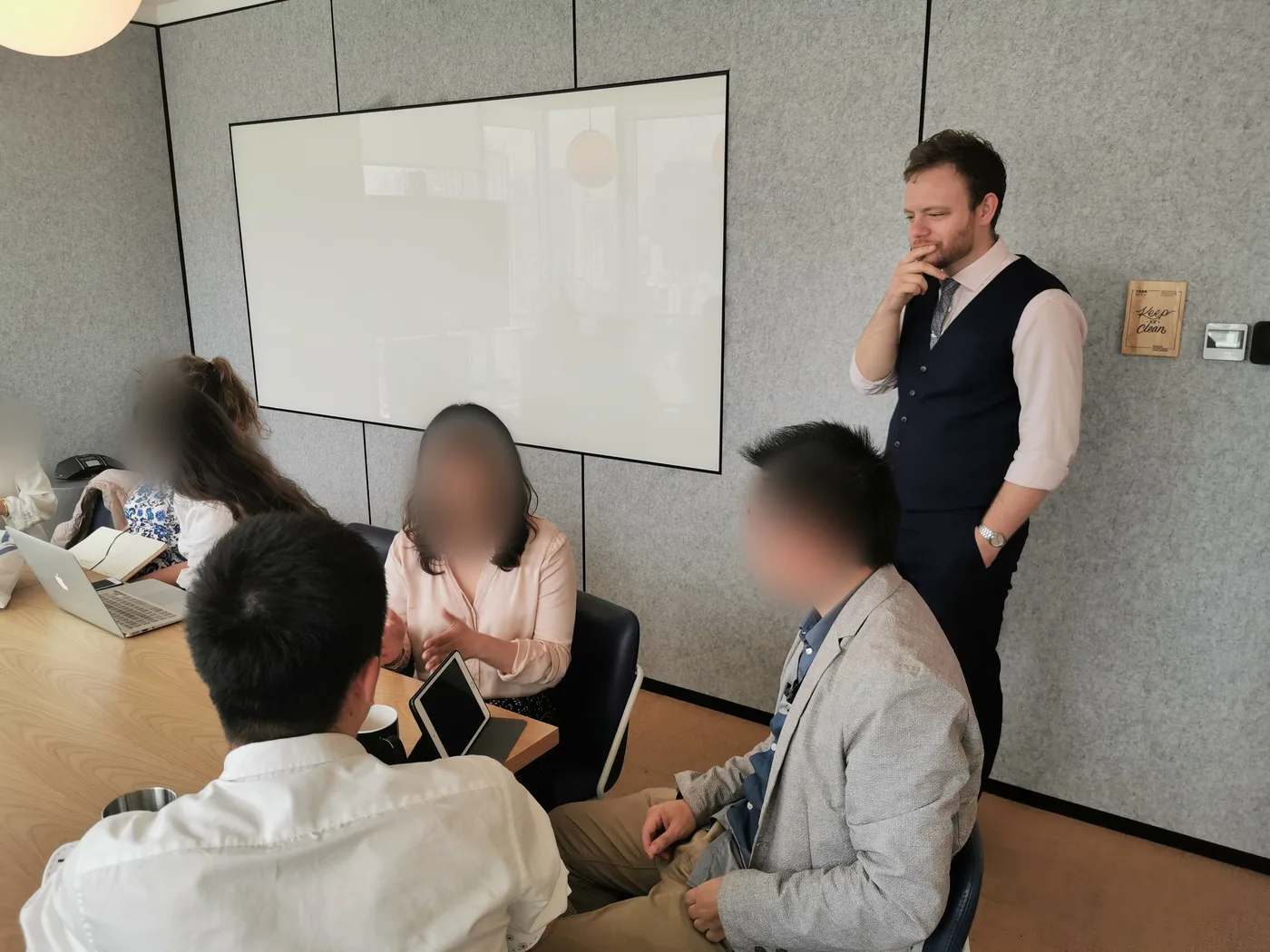
The sessions combined concise instruction with presentation exercises, guided practice, peer observation, video review, reflection, and individualized feedback.
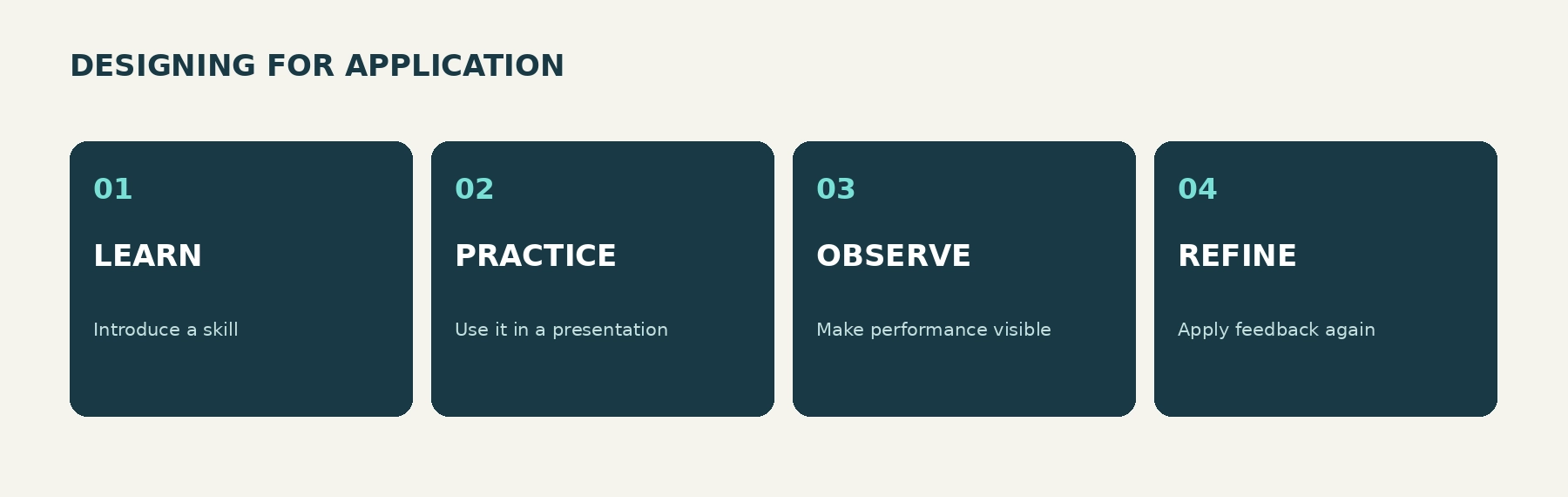
I used a recurring learning cycle, with shared performance criteria helping participants recognize what to notice and how to improve.
03 Adapting the curriculum
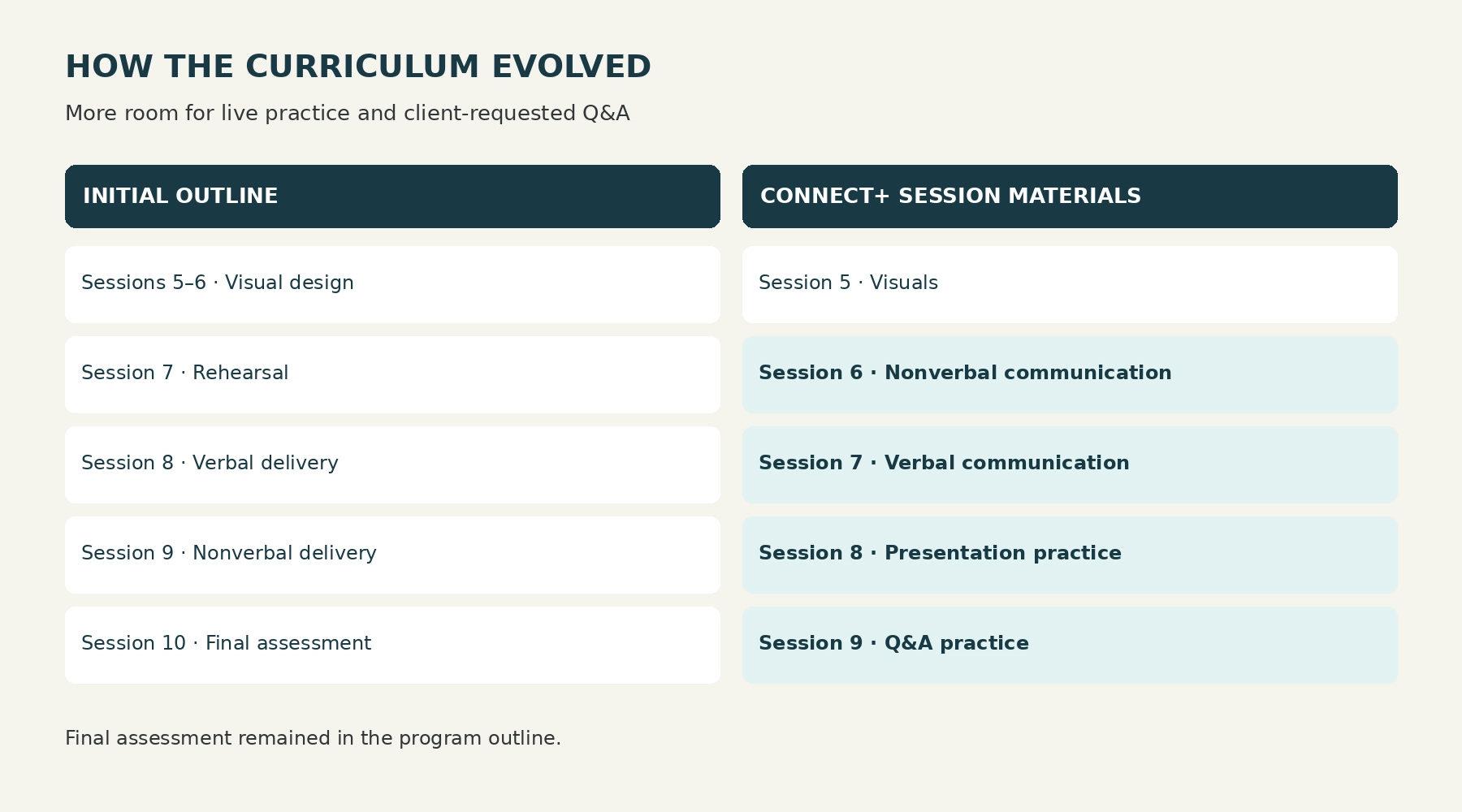
The program evolved during delivery in response to client priorities and my experience facilitating the sessions.
Connect+ specifically requested more attention to handling audience questions. I responded by introducing dedicated Q&A practice.
I also condensed the visual design content. Slides often require independent drafting and revision, so I decided to prioritize live activities that benefited from interaction: presenting, asking questions, observing, and receiving feedback. Moving verbal and nonverbal communication earlier gave participants more opportunities to practice those skills in later sessions.
04 Making assessment actionable
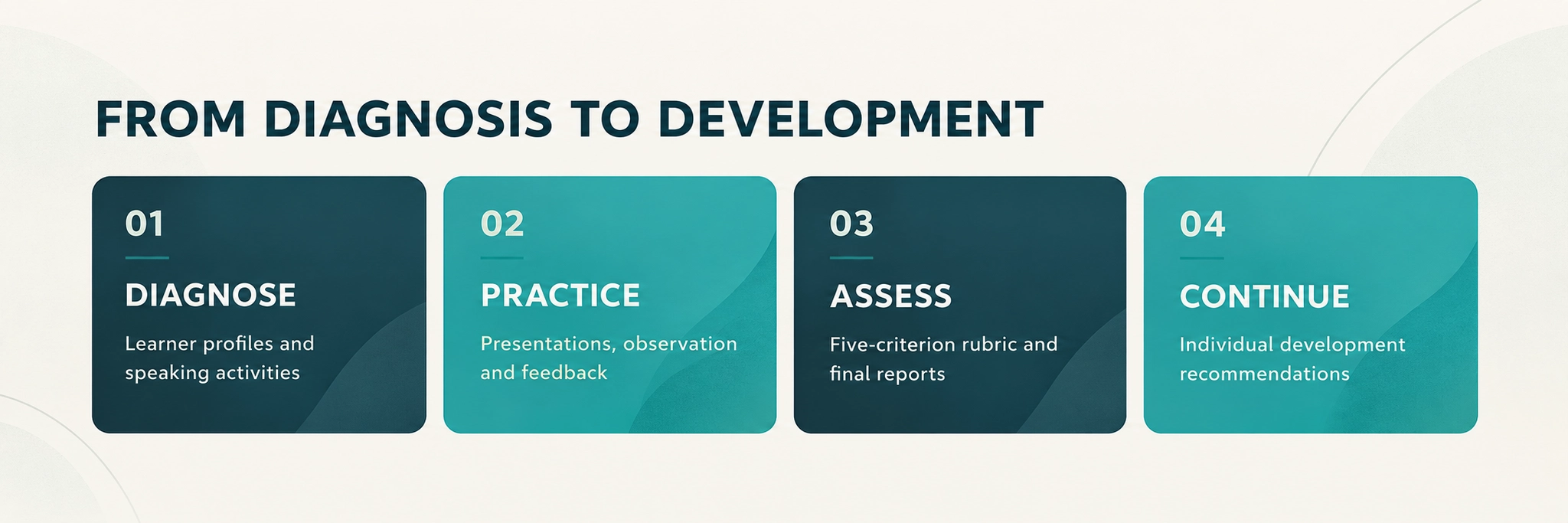
I designed feedback as a progression from early diagnosis and practice to formal assessment and individual development recommendations.
I developed a Performance Notes Sheet organized around presentation structure, familiarity with material, visual support, verbal performance, and nonverbal performance.
This helped participants observe one another's presentations and give feedback on specific aspects of performance rather than relying entirely on general impressions.
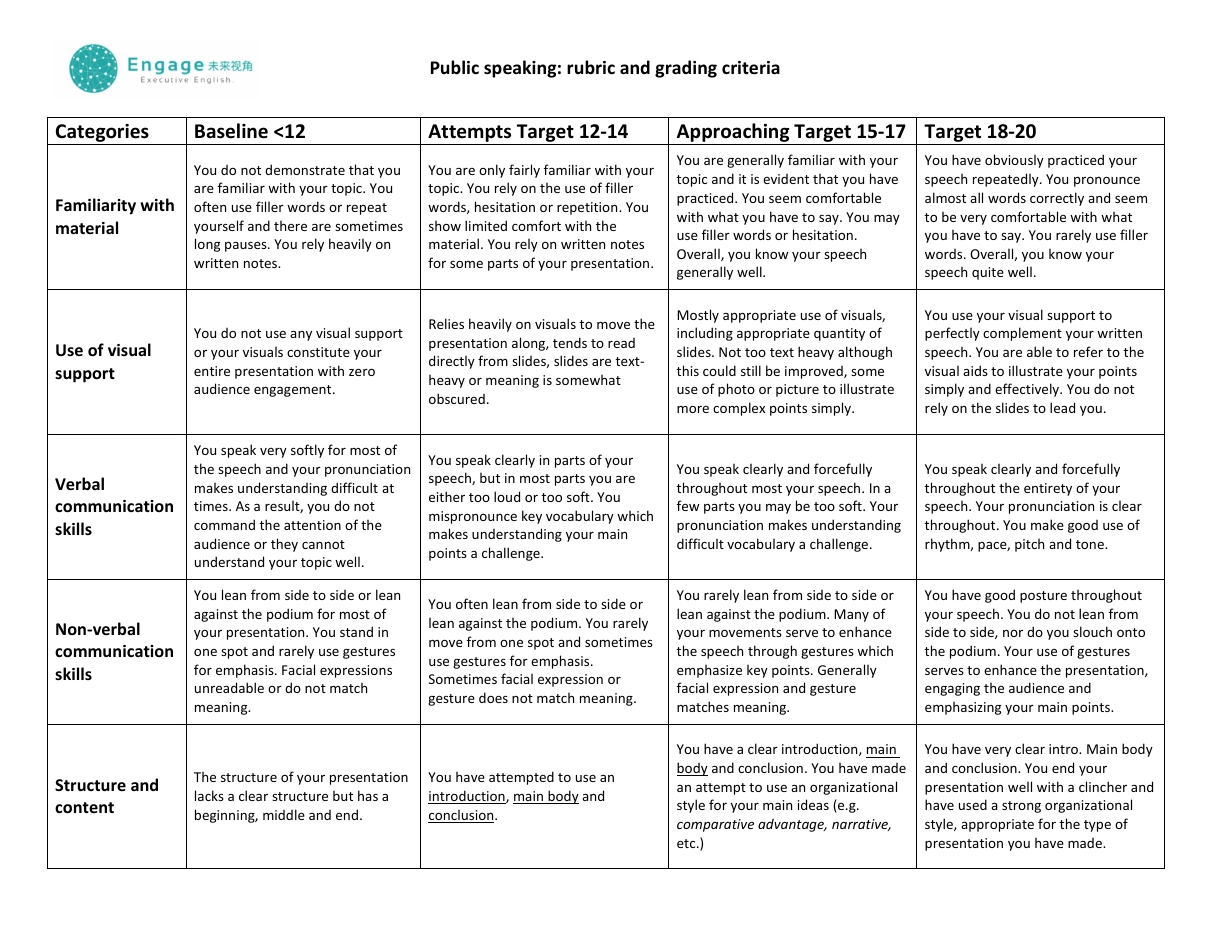
For formal assessment, I used a five-criterion rubric covering:
- Presentation structure
- Familiarity with material
- Visual support
- Verbal communication
- Nonverbal communication
Each criterion carried equal weight, providing a consistent framework for evaluating final presentations.
At the end of the program, I prepared individualized performance reports documenting participants' development, ongoing challenges, and recommended areas for further practice.
The goal was to make feedback specific enough that learners could recognize what to continue doing and what to change.
05 Evidence of development and application
The final performance reports documented different patterns of development across the cohort.
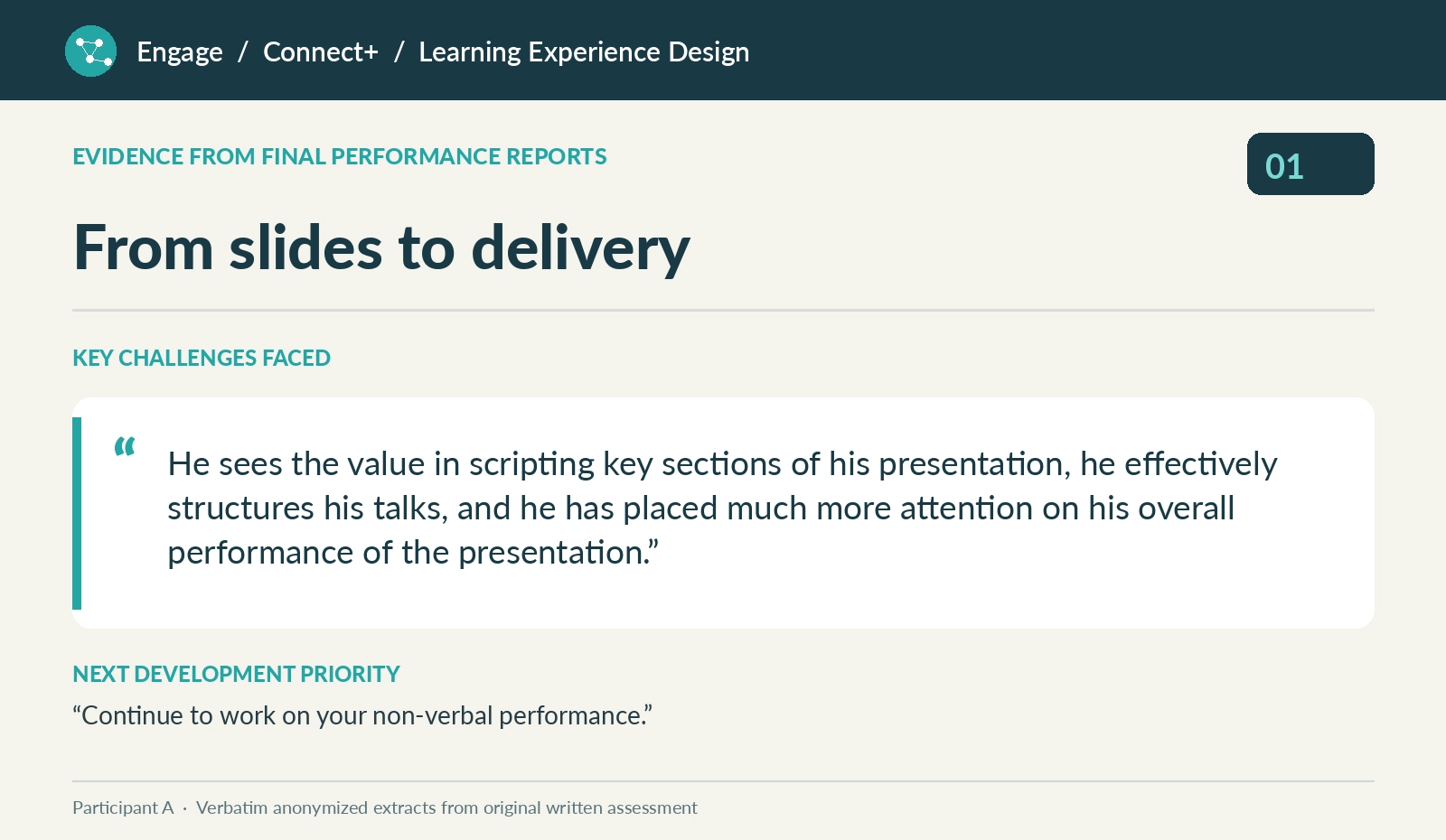
From slides to delivery. One participant shifted his focus from attractive slides toward scripting, structure, and delivery. His final report documented significant vocal improvement while identifying nonverbal communication as a continuing priority.
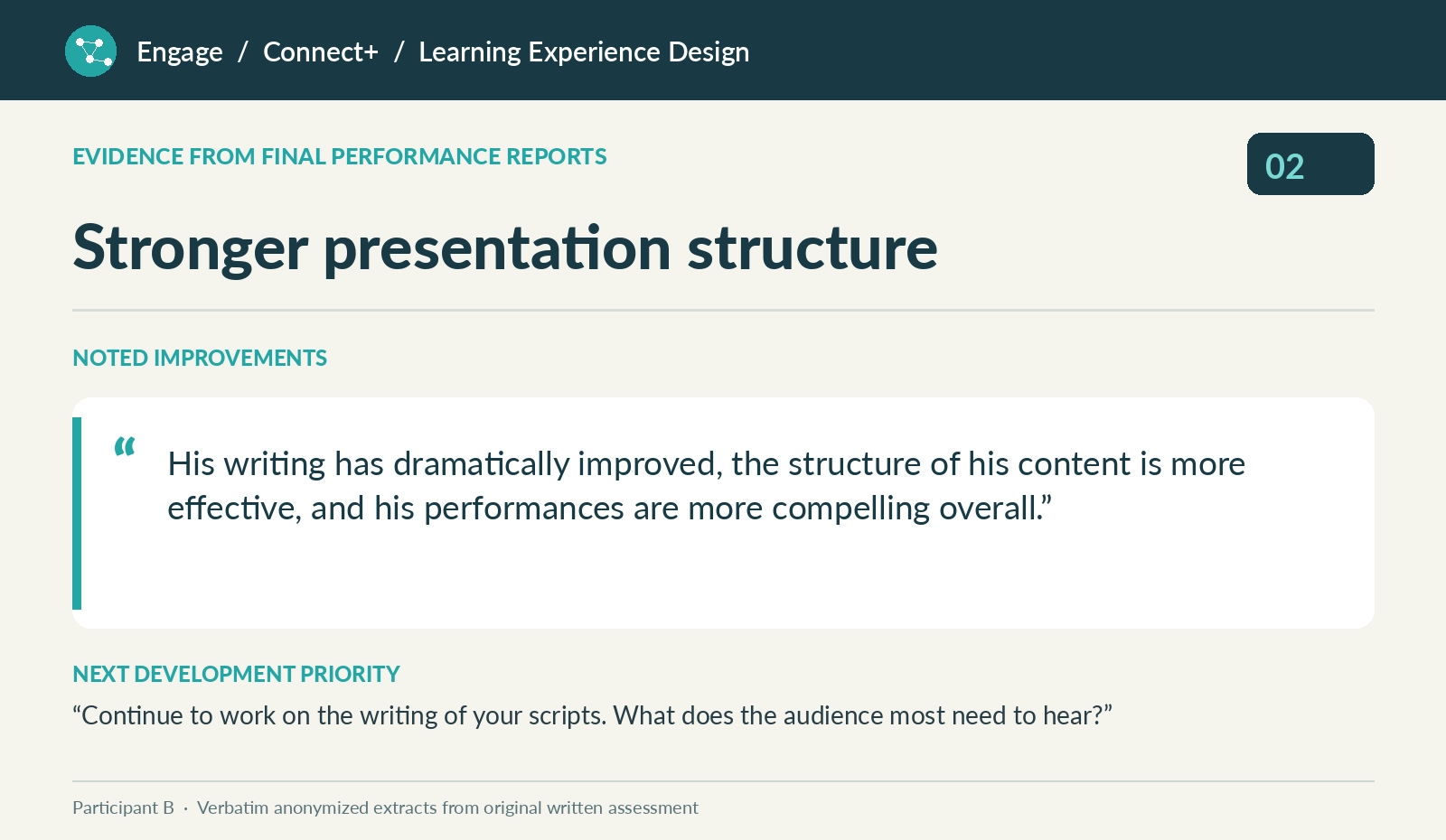
Building stronger presentation structure. Another participant developed stronger introductions, conclusions, and overall presentation structure, with more effective writing documented in the final report.
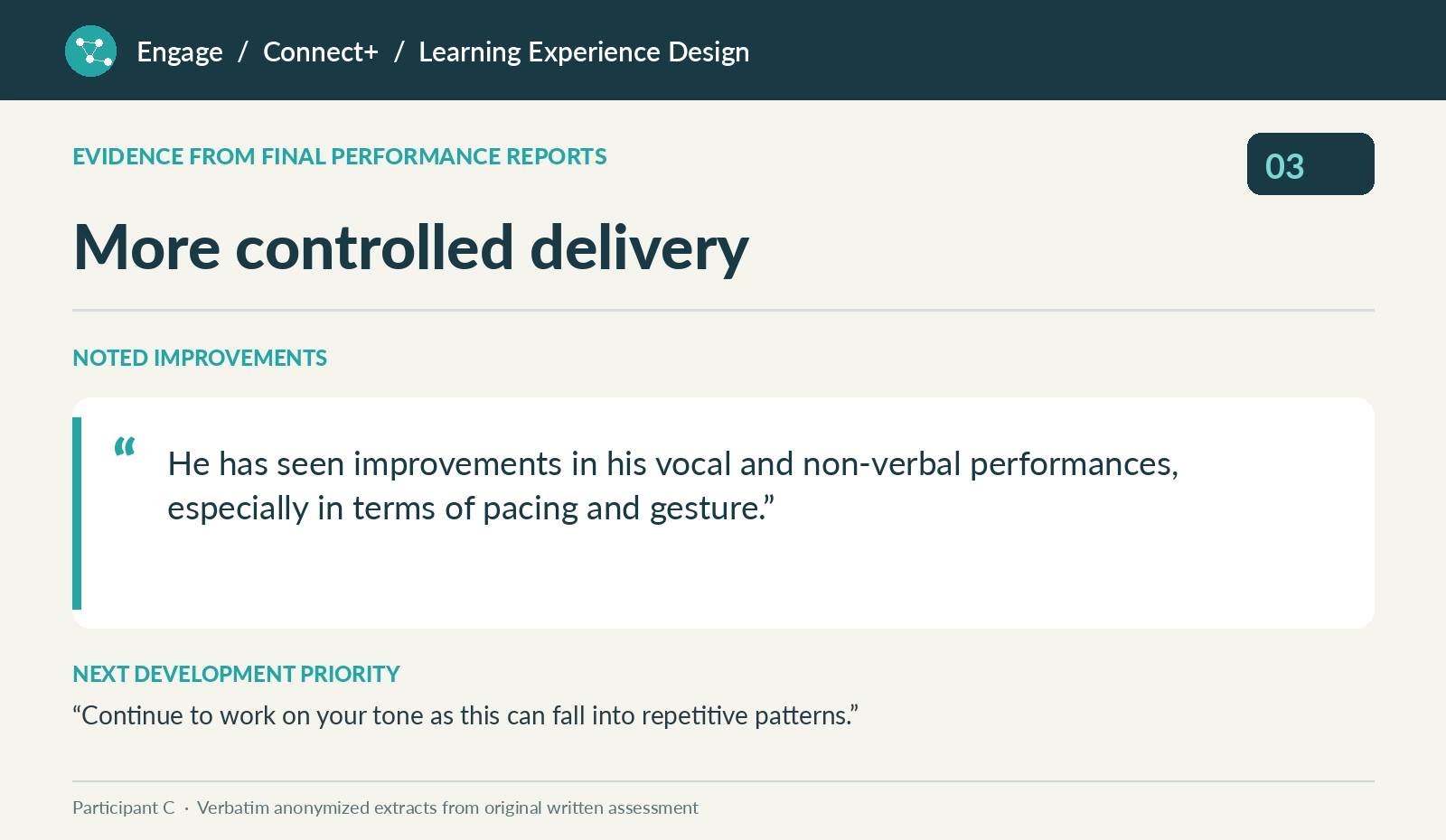
Communicating more persuasively. A third participant developed clearer, more persuasive presentation structure; vocal and nonverbal delivery remained areas for further work.
One participant pitching prospective investors repeatedly told me he was applying feedback from our initial needs-analysis session in subsequent pitches, an example of participant-reported application outside training.
The available evidence is qualitative, drawn from my observations, individual performance reports, and participant feedback. I did not collect comparable pre- and post-program scores or measure commercial outcomes attributable to the training.
06 What I took forward
The Connect+ pilot became the foundation for a reusable ten-session Engage curriculum that I subsequently adapted for individual coaching engagements.
It also reinforced several principles that shaped my approach to professional development.
Diagnose before designing. Individual learner profiles and early performance observations helped me identify the skills participants needed to develop and tailor my coaching accordingly.
Make learning observable. Clear performance criteria helped participants recognize the different elements of effective communication and engage more meaningfully with feedback.
Prioritize application. Live sessions were most valuable when learners could practice, receive feedback, and refine their performance.
Adapt to emerging needs. The curriculum provided structure, while ongoing observations and client input helped me make changes that better served the group.
Project materials
Materials behind this case study: learner profiles, lesson plans, the Engage Performance Notes Sheet, an original-versus-revised curriculum comparison, a five-criterion assessment rubric, and individual end-of-course performance reports.
Identifiable learner records and complete individual reports are not published to protect confidentiality.